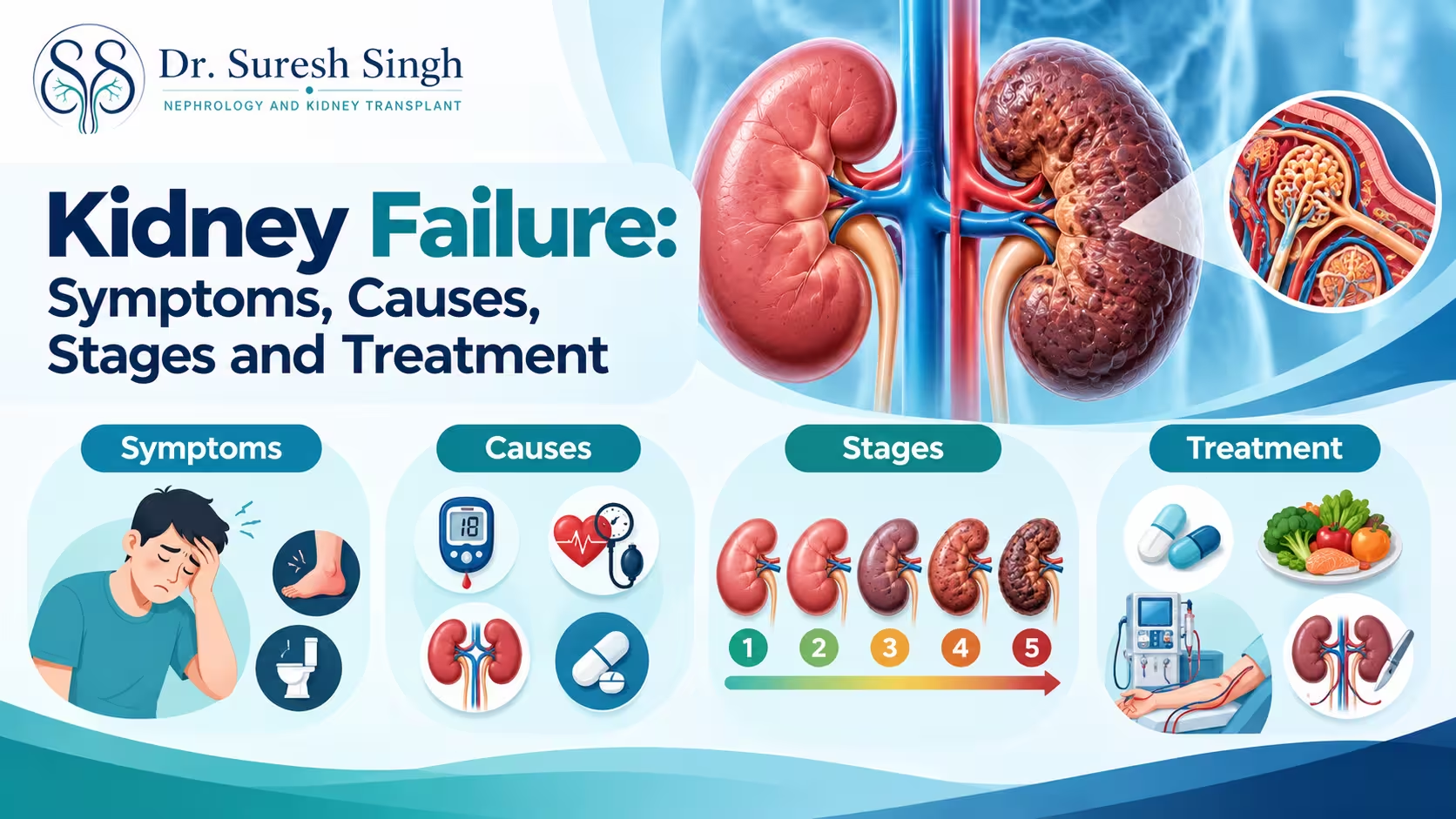
Kidney failure happens when both kidneys lose their ability to filter waste, balance fluids, and remove toxins from the blood, functioning at less than 15% of normal capacity.
What Does Kidney Failure Do to the Body?
Think of kidneys as filters that work around the clock; one sees that they remove any waste from the blood to get rid of it in the form of urine. The other duty of the kidneys includes balancing the levels of water, salts, and minerals within the body.
Should the kidneys fail to perform in this manner, there will be a buildup of waste products and fluids. Blood pressure goes high while the mineral balance within the body gets disrupted. There will be development of anaemia since this disease affects the number of working red blood cells in the body.
As the functioning ability of the kidneys drops, performing tasks becomes difficult. At this stage, an individual gets fatigued by just walking for a short distance. Loss of appetite is another problem that may result from poor functioning of the kidneys. Feet swell up and tight-fitting shoes are a problem.
Kidneys may still be producing urine despite the fact that their functioning ability is very low.
Signs That Should Not Be Ignored
Kidney problems do not always cause pain. This is one reason people may not realise something is wrong until blood or urine tests show a change.
Some signs to watch for include:
-
Feeling tired even after getting enough sleep.
-
Swelling around the eyes, feet or ankles.
-
Urine that looks unusually foamy or contains blood.
-
Passing much less urine than usual.
-
Feeling sick, losing appetite or vomiting.
-
Itchy skin that does not seem to have a clear cause.
-
Muscle cramps, especially at night.
-
Breathlessness or difficulty lying flat because of fluid build-up.
-
Trouble concentrating or feeling unusually drowsy.
There can be many other reasons for such abnormalities, and hence they cannot be considered an indication of renal failure. The patient needs to undergo tests such as blood and urine tests to identify the cause.
Do not wait till you have a regular appointment with your physician if your breathing is severely affected, if there is confusion, chest pain, or urine production is severely reduced.
Why Do Kidneys Fail?
The causes of kidney failure can be many. In some instances, the damage is gradual in nature. There may be other times when an acute disease will make the functioning of the kidney too difficult.
In such cases, diabetes and hypertension are the two main causes of kidney damage. The presence of excessive sugar in the blood will cause problems in the small blood vessels of the kidneys.
Other causes include:
-
Kidney diseases: Certain conditions cause swelling or damage inside the kidneys.
-
Severe dehydration: Losing too much fluid through vomiting, diarrhoea or other causes can reduce the blood reaching the kidneys.
-
Serious infections: A severe infection can cause a sudden fall in kidney function.
-
Urine blockage: A stone, enlarged prostate or another blockage can stop urine from draining properly.
-
Certain medicines: Some medicines can injure the kidneys, particularly when used in high doses or during dehydration.
-
Inherited conditions: Some kidney problems run in families and may become worse over time.
Sometimes, kidney function falls after major surgery, heavy blood loss or a serious illness. Doctors need to find the cause before deciding on treatment.
The Two Main Types of Kidney Failure
The speed at which kidney function falls helps doctors understand what kind of problem they are dealing with.
Sudden kidney injury
This is known as acute kidney injury. The kidney’s function declines over a few hours or days. Dehydration and certain severe infections, blockages, and some medicines may cause this.
When the cause is removed, the kidneys may recover; however, the recovery may not be complete, especially if the injury was severe and treatment was delayed.
Long-term kidney disease
Chronic kidney disease (CKD) occurs after several months or years. High blood pressure, diabetes, and some kidney diseases can cause the kidneys to be damaged gradually.
It will not be cured; however, its progression can be slowed. Monitoring is essential since patients might be feeling fine while they are already experiencing CKD.
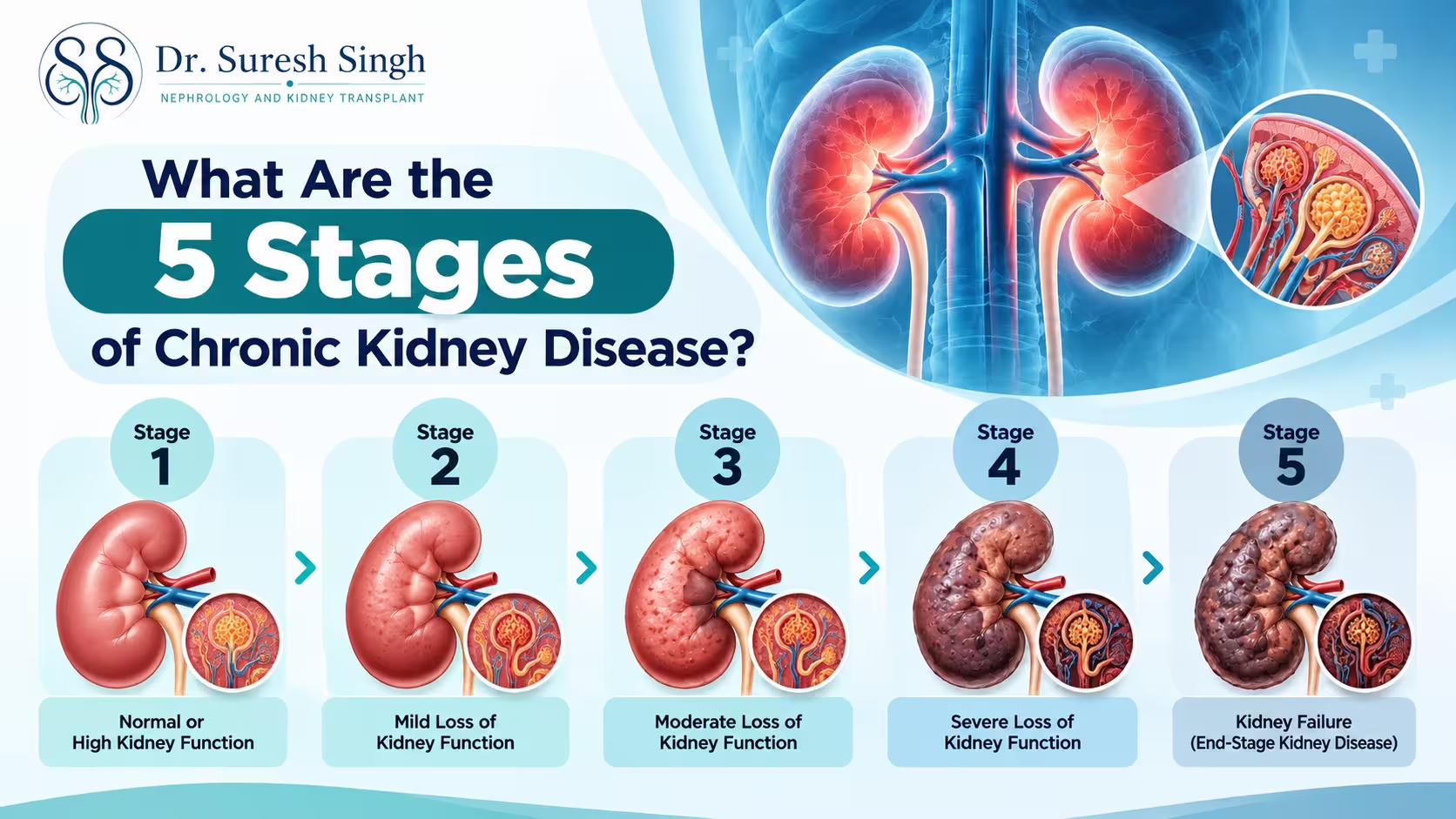
What Are the Five Stages of Chronic Kidney Disease?
Doctors use blood tests to estimate how well the kidneys are filtering waste. This result is called the estimated glomerular filtration rate (eGFR). A lower number generally means the kidneys are filtering less effectively.
|
Stage |
eGFR |
What it means |
|
Stage 1 |
90 or higher |
Filtering is in the usual range, but other signs of kidney damage are present. |
|
Stage 2 |
60–89 |
Filtering is mildly reduced, with other signs of kidney damage. |
|
Stage 3a |
45–59 |
Kidney function is mildly to moderately reduced. |
|
Stage 3b |
30–44 |
Kidney function is moderately to severely reduced. |
|
Stage 4 |
15–29 |
Kidney function is severely reduced. |
|
Stage 5 |
Below 15 |
Kidney function is extremely low. |
These stages describe long-term kidney disease. An eGFR result by itself does not always confirm CKD. For stages 1 and 2, there must also be evidence of kidney damage, and the problem generally needs to last for at least three months.
The stage does not tell the whole story. Doctors also look at urine protein levels, symptoms, other medical conditions, and how quickly the test results are changing.
At stage 5, some people need dialysis or a kidney transplant. Others may be managed differently for a time, depending on their symptoms and overall health.
How Do Doctors Check Kidney Function?
Several tests can provide information about what is taking place in the kidneys.
The first test measures creatinine level in blood. Creatinine is a waste product that is normally excreted from the body by healthy kidneys. The value of this test determines eGFR.
A urine test is used to detect protein or blood in the urine. Proteinuria can indicate a presence of damage to the kidneys even if the eGFR is within normal range.
Also, patients may undergo blood pressure, blood glucose, and mineral tests. Ultrasound imaging can reveal kidney size and structure, as well as the presence of any obstruction. Additional tests may be necessary if the cause is not clear.
Patients who have diabetes, high blood pressure, or kidney disease in their family should undergo kidney checkups regardless of how well they feel. Early detection will allow slowing down the progression of the disease.
What Treatment Can Help?
There is no single treatment for every person with kidney failure. The plan depends on the cause, the amount of kidney function left, and how the person is feeling.
First, deal with the cause
When kidney function drops suddenly, doctors look for something that can be treated. A person who is severely dehydrated may need fluids. An infection may need treatment, while a blockage may need to be removed.
For long-term kidney disease, keeping blood pressure and blood sugar under control can help protect the kidneys. Medicines may also be prescribed to manage swelling, anaemia or changes in mineral levels.
Food, fluids and medicines
People with kidney disease are often given advice about what to eat and drink. The advice can be different from one person to another.
Some may need to cut down on salt to help control swelling and blood pressure. Others may need to limit foods high in potassium or phosphorus if blood tests show that these levels are too high. People who retain too much fluid may also need to limit their drinks.
Avoid making major diet changes without medical advice. Drinking extra water does not repair damaged kidneys, and some common painkillers can make kidney problems worse. Always check with a doctor before using medicines or herbal products regularly.
When is dialysis needed?
If the kidneys cannot remove enough waste and excess fluid, dialysis becomes necessary. A machine or special fluid placed in the abdomen helps remove some of the work the kidneys cannot do.
Blood is cleaned with the help of a machine in hemodialysis. Peritoneal dialysis uses the lining of the abdomen to remove waste and extra fluid.
Not all people with kidney disease require dialysis. The decision depends on the person’s symptoms, blood tests, and overall status. The eGFR (estimated glomerular filtration rate) values are considered, but a single eGFR value doesn't necessarily determine the requirement for dialysis.
Can a kidney transplant help?
Kidney transplantation might be an appropriate treatment for individuals with advanced cases of kidney failure. In the process, the kidney of a living or deceased donor is transplanted into the individual's body.
Transplantation provides a solution to the need for continuous dialysis in certain circumstances. It involves the use of drugs that will prevent rejection of the new kidney by the body. A medical team will first assess the individual's suitability for the transplant.
Can Someone Recover From Kidney Failure?
In some cases, yes. If kidney function suddenly drops because of an issue that can be resolved, it may improve after that issue is resolved. However, the kidneys may not fully return to how they were before.
Long-term kidney damage is usually different. If kidneys have been damaged for a long time, the lost function is usually irreversible. Further damage and the issues caused by loss of kidney function may be controlled.
It is important not to make assumptions and think that there is no way to improve kidney function. People with kidney disease may require long-term follow-up and treatment before they reach a stage where they require dialysis. Some may never reach that stage. People with different types and causes of kidney damage require individualized management.
Personalised Kidney Care With Dr. Suresh Singh
Dr. Suresh Singh, a Nephrologist in Lucknow, has over 5 years of nephrology experience and has performed more than 50 kidney transplants and 200 kidney biopsies, according to his published professional profile. His clinical expertise includes chronic kidney disease management, glomerular diseases, dialysis-related care, and interventional nephrology. Patients with reduced kidney function or kidney failure can seek specialist evaluation to understand their test results, manage associated complications, and discuss appropriate treatment options, including dialysis planning and kidney transplant evaluation when clinically indicated.
Related Treatments
Depending on the underlying cause and severity of kidney disease, the following services may be relevant:
Conclusion
Kidney failure can affect people in different ways. Some discover it through a routine test, while others notice swelling, tiredness, or changes in how they feel. Getting the cause checked is the first step towards choosing the right care.
Dr. Suresh Singh is a Consultant Nephrologist and Kidney Transplant Physician in Lucknow with over 5 years of experience. He cares for patients with chronic kidney disease, kidney failure, and other kidney conditions. A proper assessment can help patients understand their options and make decisions about their treatment and daily life.
Frequently Asked Questions
Can kidney failure cause pain?
Pain can be caused by several conditions that co-exist with kidney failure, such as kidney stones and urinary tract infections.
Can a person with kidney failure continue working?
Many people are still able to engage in their usual activities and pursue their daily, social and economic activities during the early stages of the disease. People with advanced disease will need to adjust their activities to their symptoms and treatment.
Does kidney failure always lead to dialysis?
People can postpone the need for dialysis with the right medical management, dietary modifications, and other changes to their lifestyle. These changes are aimed at slowing down the loss of kidney function.
Should people with kidney disease limit their intake of all protein?
No. The suggested intake of protein varies by the stage of kidney disease, other nutritional needs, and whether the person is on dialysis. A doctor or kidney dietitian would be able to provide more information.
How often should kidney function be assessed?
There is no standard schedule that applies to all persons. Likely, persons with diabetes and/or high blood pressure and known kidney disease will undergo periodic blood and urine testing. How often the tests are repeated will depend on the results of the previous tests and the person’s risk.