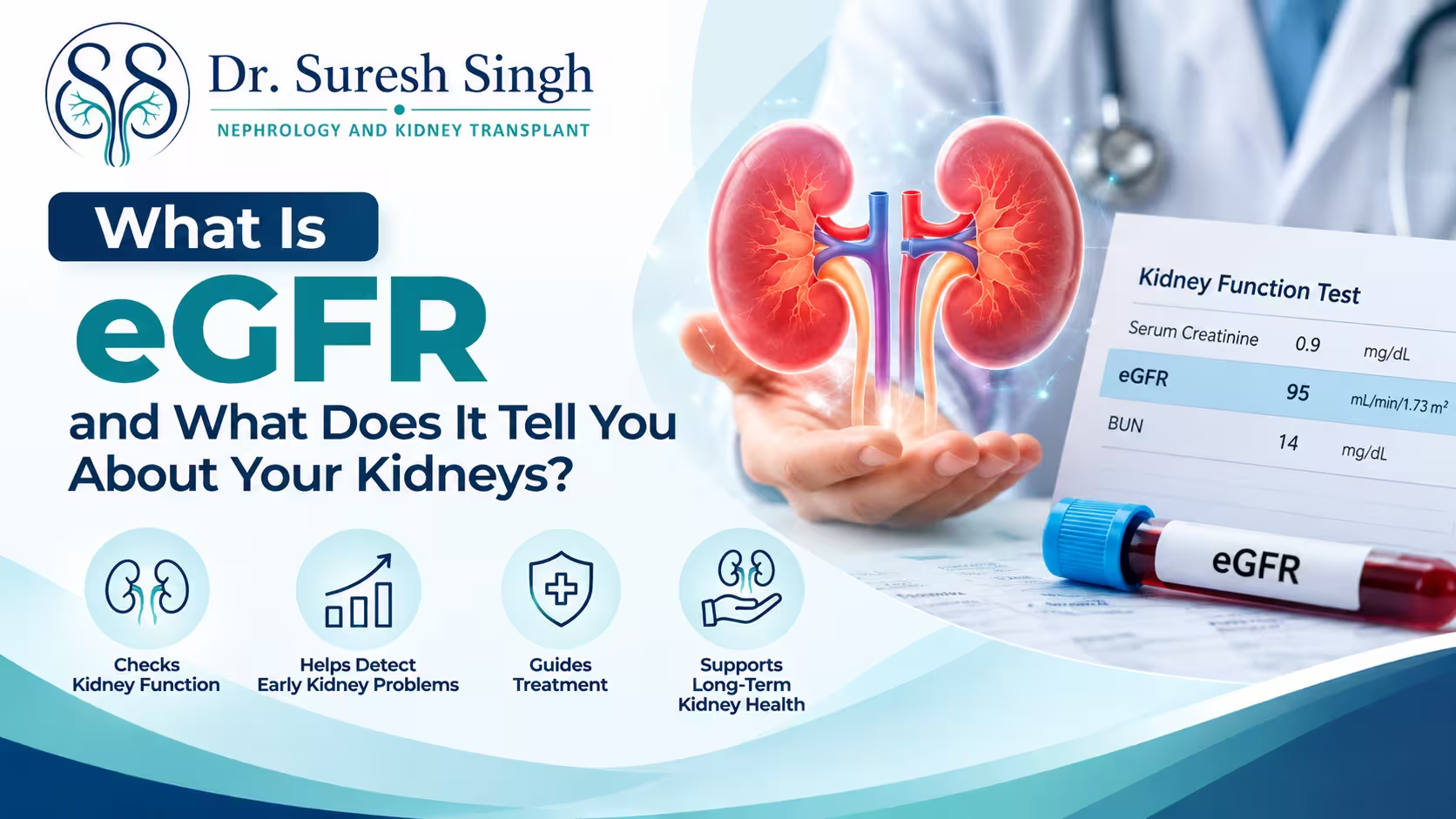
eGFR stands for estimated glomerular filtration rate, a blood test score that measures how well your kidneys filter waste and excess fluid from your blood.
What Is eGFR?
Estimated glomerular filtration rate (eGFR) measures your kidneys’ ability to filter waste from your blood.
There are many reasons your kidneys could be losing their filtering ability. For one, there may be scarring of your kidneys, and that can obstruct the normal flow of urine through your kidneys. There may also be thickening of the walls of your kidney’s blood vessels that can decrease blood supply to your kidneys. Other times, there may be blockages in your ureter that can prevent flow of urine from your kidneys to your bladder.
When your kidneys are no longer able to perform their functions optimally, your body begins to retain waste products that would have been removed by your kidneys.
Doctors are often unable to measure your kidney’s filtration rate in an office visit. However, they can calculate your eGFR using a blood test to check your creatinine level, as well as your age and sex.
Creatinine is a waste product made from your muscles. Your kidneys are usually able to remove most of it from your blood. However, when your kidney function decreases, it can’t be removed from your blood, and your eGFR can go down.
For these reasons, doctors often order a test to calculate your eGFR to check the health of your kidneys, even if you have no symptoms.
What Is a Normal eGFR Level?
When you look at your report, you may want a simple answer: is the number normal or not?
For most adults, an eGFR of 90 or above is generally considered normal. But the result needs to be understood alongside other findings, especially urine tests and any history of kidney problems.
Here is a general guide to the numbers.
These ranges are useful, but they are not the whole story. For example, an eGFR of 75 does not automatically mean you have kidney disease. If your urine tests are normal and there are no other signs of kidney damage, the doctor may not diagnose CKD.
On the other hand, someone with an eGFR above 90 may still have kidney disease if tests show persistent protein leakage or another sign of damage.
What Does a Low eGFR Actually Mean?
Seeing a low eGFR can be scary, especially when you don’t know the reason for the test or why the result is low. Why the number is low is often just as important as the number itself.
When eGFR is low, it could mean the kidneys are losing function. People who have long-standing diabetes and/or high blood pressure are at risk for developing kidney disease and kidney failure.
In other situations, there can be an acute (sudden) loss of kidney function when someone becomes very sick or in cases of severe volume depletion (loss of body fluids). Certain medications, like non-steroidal anti-inflammatory drugs (NSAIDS), can affect kidney function. The explanation of why kidney function is affected can affect how it is managed.
Doctors are often interested in how recent your result is and how it compares to previous results. Sometimes there can be slight variation from test to test. A result of 85 this time and 80 last time is not the same as a result of 85 this time and 40 last time. The second situation is something that warrants more concern, especially if the variation is related to illness.
There are other things to consider when you have a low eGFR. Things like symptoms, other tests, and reasons you may have been tested in the first place, etc.
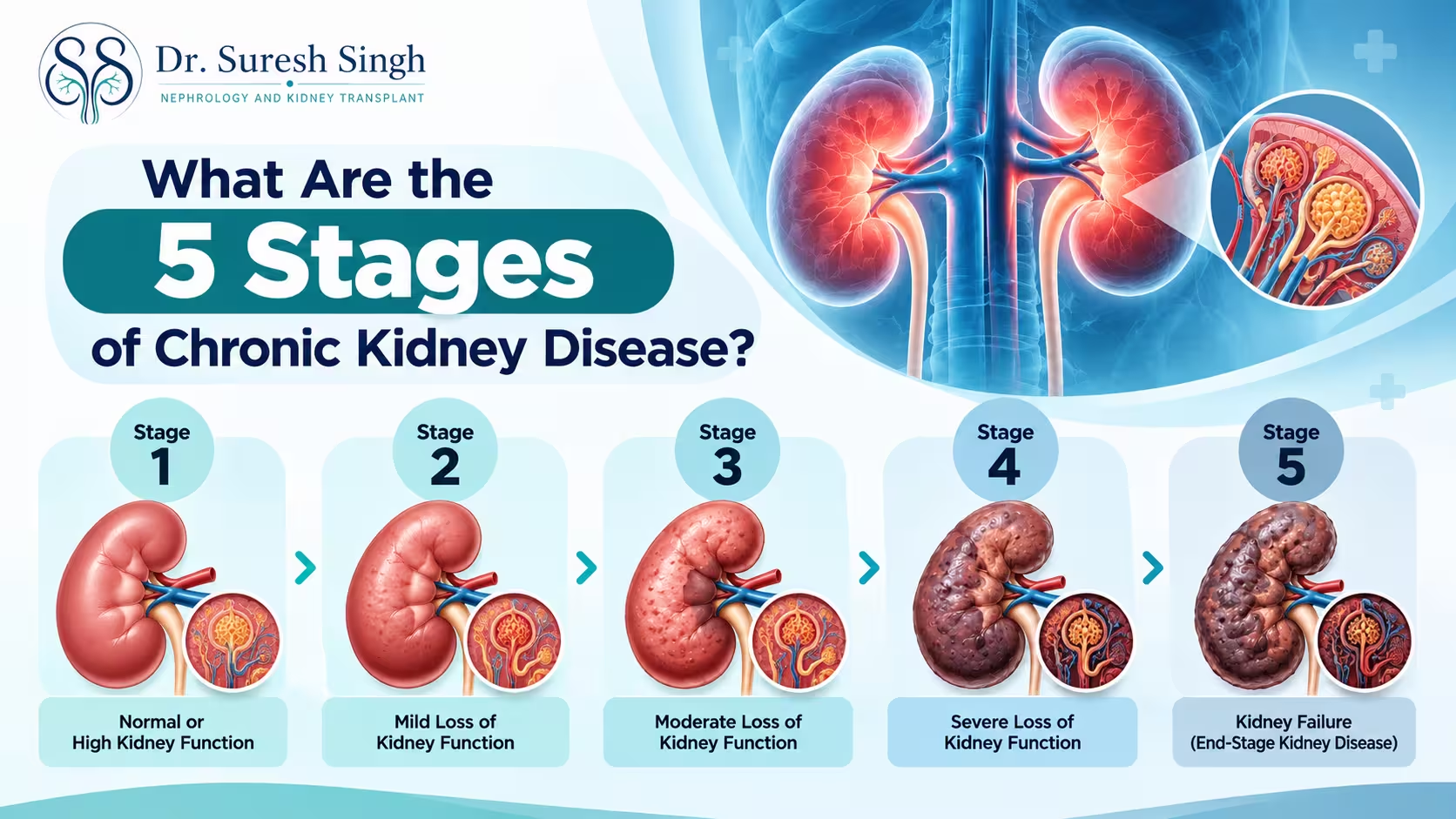
What Are the Different Stages of Chronic Kidney Disease?
When reduced kidney function or other signs of kidney damage continue over time, doctors may diagnose chronic kidney disease (CKD). The eGFR result helps them understand the level of kidney function and classify the condition.
There is something important to understand here. A stage number does not tell you exactly how you will feel or how quickly your condition will progress. Some people remain stable for years, while others need closer monitoring and changes to their treatment.
Chronic kidney disease is generally diagnosed when reduced kidney function or other signs of kidney damage persist for at least three months. A sudden drop in kidney function is different and may need urgent assessment.
Why Does eGFR Go Down?
A falling eGFR can have several causes. Two of the most common are diabetes and high blood pressure.
Chronically elevated levels of blood sugar result in damage to the smallest blood vessels assisting in the filtration of blood by the kidneys. Similarly, high levels of blood pressure strain the filtering system and eventually lead to its malfunction.
Sometimes a decrease in eGFR level happens much quicker as a result of dehydration, severe illness, and even some medications.
It should also be mentioned that age and muscle mass should be considered when evaluating eGFR since the latter takes into account the levels of creatinine.
The key point here is not only understanding the reasons for the decline in eGFR levels, but also figuring out whether this is a transient situation, whether the kidneys are affected, and how to prevent future problems.
Can Your eGFR Be Low Even If You Feel Fine?
Yes, and this is why kidney issues can be undetected.
Individuals who suffer from chronic kidney disease at an earlier stage may still carry on with their daily activities. They keep working, eating, and sleeping as they usually do without any pain or alteration in urination.
Even in the state when certain functions are affected, the kidneys can perform most of their operations. Symptoms may manifest themselves later as the problem gets more complicated.
In case you have diabetes, high blood pressure or there are kidney failure in your family, consult your doctor about testing your kidneys' condition regularly. There is no need to wait till you become ill.
Which Tests Are Needed Along With eGFR?
An eGFR result is useful, but it cannot answer every question about kidney health. Your doctor may recommend a few additional tests to understand the result better.
Serum Creatinine
This blood test measures the amount of creatinine in your blood. It is used to calculate eGFR and helps doctors assess kidney filtering function.
Urine Albumin-to-Creatinine Ratio (uACR)
This test checks for albumin, a type of protein, in your urine. Protein leakage can be an early sign of kidney damage, even when eGFR is still within the usual range.
Urine Routine and Microscopy
This test looks for blood, protein and other abnormalities in the urine. The findings may help identify signs of kidney damage or a urinary tract problem.
Blood Pressure Measurement
Hypertension may cause kidney damage, and kidney damage may also lead to hypertension. Monitoring will assist the doctor in determining your general risk.
Based on your readings, you may have to undergo additional testing such as ultrasonography. In some cases, the doctor may ask for retesting of your blood and urine tests to determine if this is a consistent pattern.
What Should You Do If Your eGFR Is Low?
In case your test reveals a low eGFR, don’t panic, although it is serious.
First, talk to your doctor about the results. Take your old reports if you have them because it’s easier to interpret changes in results over time. Let the doctor know about any sickness or dehydration that you experienced recently. Tell him if you have taken any medication.
Your doctor will decide the right way of treatment based on the underlying causes. Some people would require tighter regulation of their blood sugar levels or blood pressure. For others, medicine adjustment and investigations related to a kidney disease could be required. If your kidneys are functioning poorly, some medications require dose changes.
Don’t go off the prescribed medication or start taking any supplement without the advice of the doctor. There are some medications and nutritional supplements that can affect your kidneys.
In case you stop urinating, become extremely breathless, or have quickly increasing swelling, see your doctor urgently.
Why Choose Dr. Suresh Singh for Kidney Care in Lucknow?
Dr. Suresh Singh is a Nephrologist in Lucknow. His listed services include the evaluation and management of chronic kidney disease, kidney failure, dialysis-related needs, glomerular diseases, kidney biopsy and kidney transplantation.
For patients with an abnormal eGFR result, a specialist assessment can help determine whether the change reflects a temporary problem, chronic kidney disease or another medical condition.
A kidney evaluation may include a review of serum creatinine, eGFR trends, urine albumin levels, blood pressure, medical history and current medicines. Further investigations and treatment recommendations depend on the findings.
If you have persistently abnormal kidney function tests or risk factors such as diabetes or hypertension, arranging a consultation can help you understand your results and the next steps in your care.
Related Services
Dr. Suresh Singh's website lists the following services relevant to kidney function assessment and management:
Conclusion
Learning about your eGFR results can leave you with more questions than answers. The next step would be to determine what is causing your low eGFR and whether your kidneys need more advanced treatment and care. The goal is for you to be able to preserve as much of your kidney function as possible by making the best decisions for yourself based on what you learn.
Dr. Suresh Singh is a Consultant Nephrologist and Kidney Transplant Physician in Lucknow, with 5+ years of experience in kidney transplants, chronic kidney disease, dialysis, and other advanced kidney care. He can give patients a deeper understanding of their reports and help them decide on the best treatment options suitable for them to improve their quality of life.
Frequently Asked Questions
1. Is the eGFR test painful?
No. This test involves taking blood from your arm. There might be some slight pricking when the needle is inserted into your arm, but the whole procedure does not take long – just a couple of minutes.
2. Do I have to fast before the eGFR test?
It is not mandatory to do that since this test does not involve fasting. But if there are going to be other blood tests done, then your doctor or the laboratory personnel will tell you what to do.
3. Does eGFR vary between two blood tests?
Yes. Variations are possible. Recent illness, hydration level, medications, as well as fluctuations in the level of creatinine, might influence the result.
4. Can I exercise before having my eGFR done?
Usually, it is okay to do normal activities. But intense exercise done before testing can cause changes in the blood concentration of creatinine in some people. Inform your healthcare provider if you've had intense physical activity recently.
5. How frequently should I get my eGFR checked?
It is highly individual and depends on the state of your kidneys. For instance, a person who shows normal results will require testing much less frequently than the one with chronic kidney disease or fast changing GFR.