Diabetes and Kidney Disease: Why Regular Kidney Checkups Matter
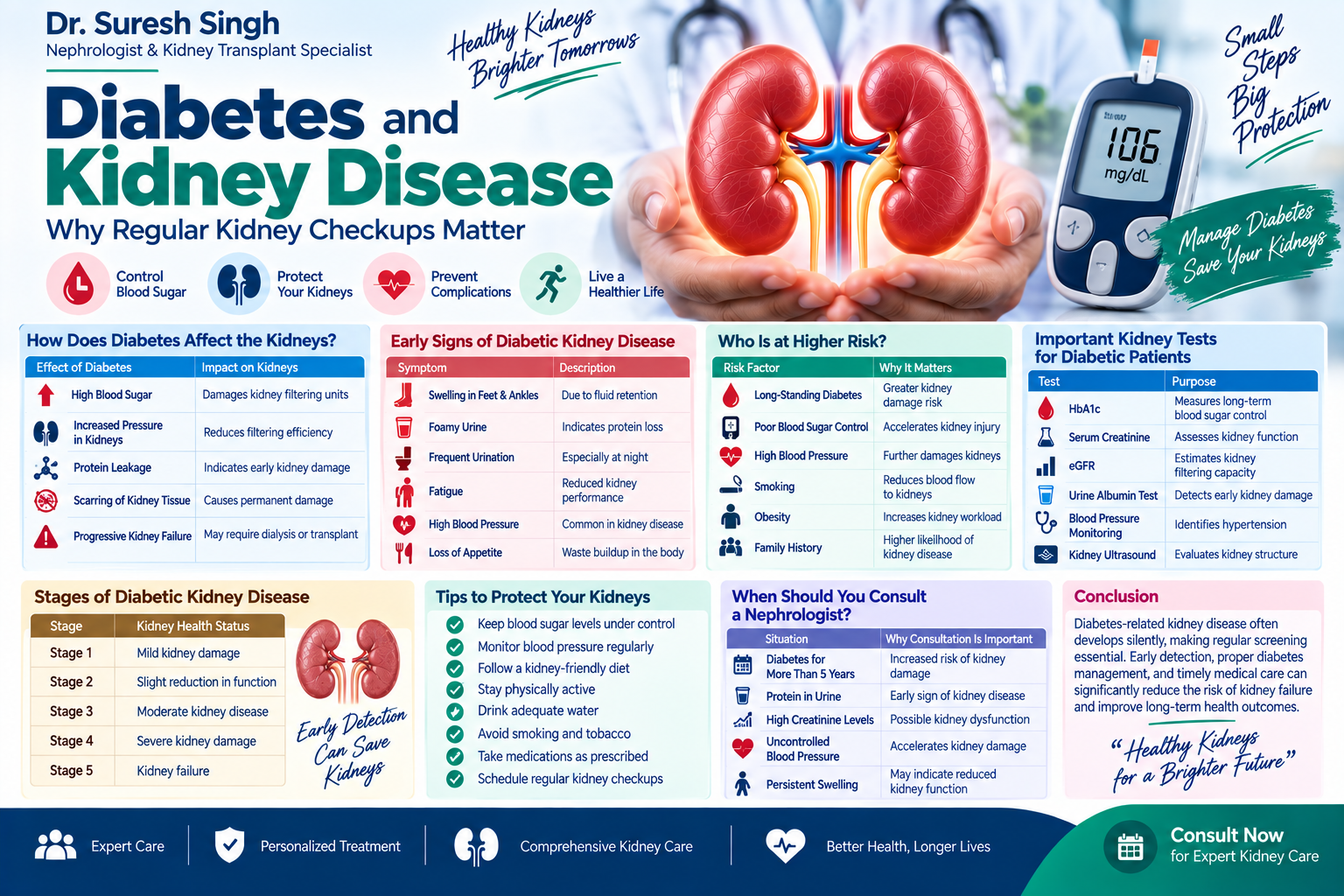
Diabetes is one of the leading causes of kidney disease worldwide. High blood sugar levels can gradually damage the kidneys over time, often without noticeable symptoms in the early stages. Regular monitoring and early intervention can help prevent serious complications and preserve kidney function.
How Does Diabetes Affect the Kidneys?
The kidneys contain millions of tiny filtering units called nephrons. High blood sugar can damage these filters, making it harder for the kidneys to remove waste and excess fluids from the body.
Effect of Diabetes | Impact on Kidneys |
|---|---|
High Blood Sugar | Damages kidney filtering units |
Increased Pressure in Kidneys | Reduces filtering efficiency |
Protein Leakage | Indicates early kidney damage |
Scarring of Kidney Tissue | Causes permanent damage |
Progressive Kidney Failure | May require dialysis or transplant |
Early Signs of Diabetic Kidney Disease
Many people do not experience symptoms initially. As the condition progresses, patients may notice:
Symptom | Description |
|---|---|
Swelling in Feet & Ankles | Due to fluid retention |
Foamy Urine | Indicates protein loss |
Frequent Urination | Especially at night |
Fatigue | Reduced kidney performance |
High Blood Pressure | Common in kidney disease |
Loss of Appetite | Waste buildup in the body |
Who Is at Higher Risk?
Risk Factor | Why It Matters |
|---|---|
Long-Standing Diabetes | Greater kidney damage risk |
Poor Blood Sugar Control | Accelerates kidney injury |
High Blood Pressure | Further damages kidneys |
Smoking | Reduces blood flow to kidneys |
Obesity | Increases kidney workload |
Family History | Higher likelihood of kidney disease |
Important Kidney Tests for Diabetic Patients
Test | Purpose |
|---|---|
HbA1c | Measures long-term blood sugar control |
Serum Creatinine | Assesses kidney function |
eGFR | Estimates kidney filtering capacity |
Urine Albumin Test | Detects early kidney damage |
Blood Pressure Monitoring | Identifies hypertension |
Kidney Ultrasound | Evaluates kidney structure |
Stages of Diabetic Kidney Disease
Stage | Kidney Health Status |
|---|---|
Stage 1 | Mild kidney damage |
Stage 2 | Slight reduction in function |
Stage 3 | Moderate kidney disease |
Stage 4 | Severe kidney damage |
Stage 5 | Kidney failure |
Tips to Protect Your Kidneys
✅ Keep blood sugar levels under control
✅ Monitor blood pressure regularly
✅ Follow a kidney-friendly diet
✅ Stay physically active
✅ Drink adequate water
✅ Avoid smoking and tobacco
✅ Take medications as prescribed
✅ Schedule regular kidney checkups
When Should You Consult a Nephrologist?
You should seek specialist advice if:
Situation | Why Consultation Is Important |
|---|---|
Diabetes for More Than 5 Years | Increased risk of kidney damage |
Protein in Urine | Early sign of kidney disease |
High Creatinine Levels | Possible kidney dysfunction |
Uncontrolled Blood Pressure | Accelerates kidney damage |
Persistent Swelling | May indicate reduced kidney function |
Conclusion
Diabetes-related kidney disease often develops silently, making regular screening essential. Early detection, proper diabetes management, and timely medical care can significantly reduce the risk of kidney failure and improve long-term health outcomes.
Dr. Suresh Singh, Nephrologist & Kidney Transplant Specialist, provides comprehensive care for diabetic kidney disease, chronic kidney disease, dialysis, and kidney transplantation, helping patients protect their kidney health for the future.