High Blood Pressure and Kidney Disease: The Silent Connection
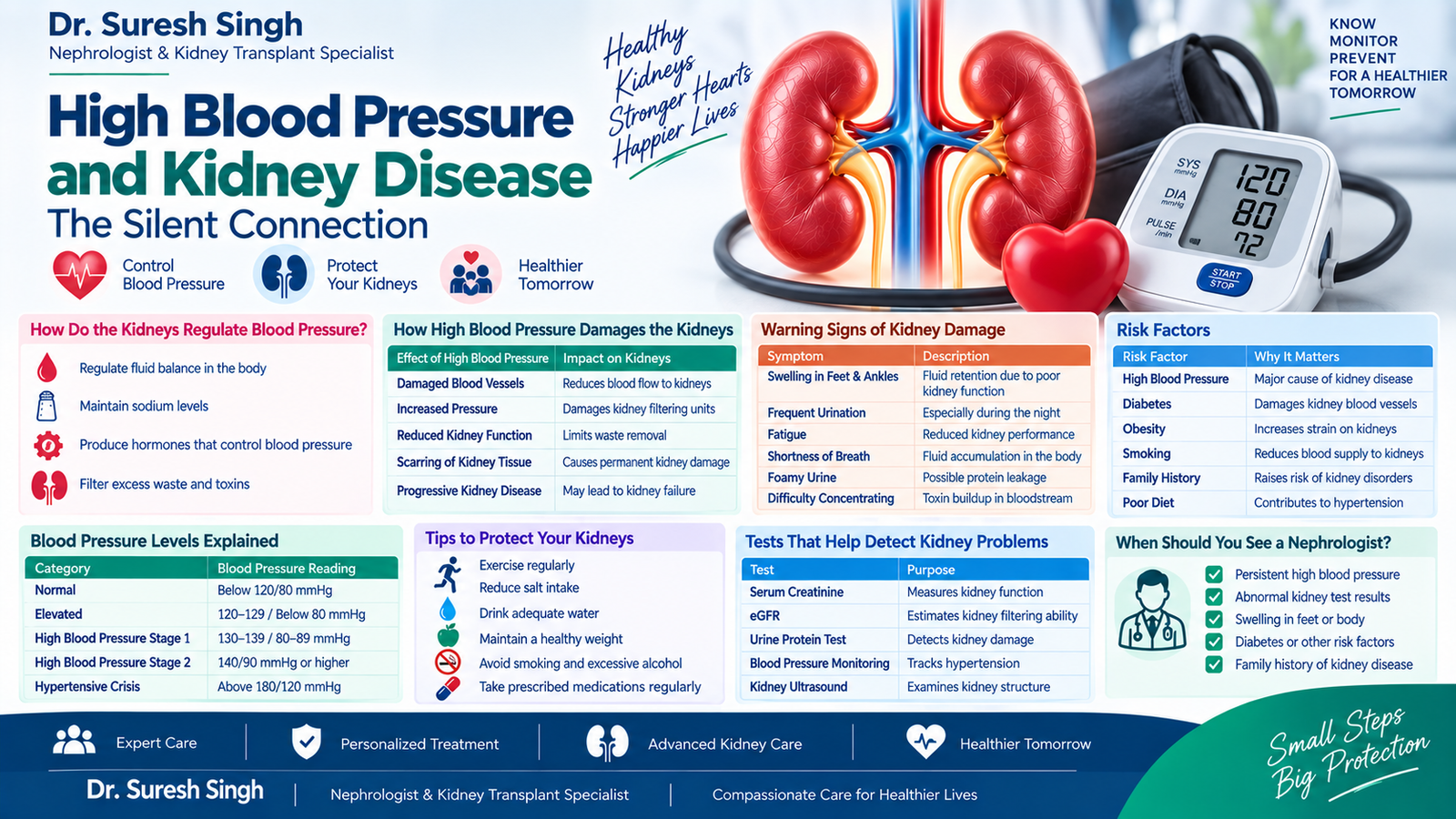
High blood pressure (Hypertension) and kidney disease are closely linked health conditions. Uncontrolled blood pressure can damage the kidneys over time, while kidney disease can also cause blood pressure to rise. Understanding this connection is essential for protecting your kidney health and preventing serious complications.
How Do the Kidneys Regulate Blood Pressure?
The kidneys help control blood pressure by:
Regulating fluid balance in the body
Maintaining sodium levels
Producing hormones that control blood pressure
Filtering excess waste and toxins
When kidney function declines, these processes become less effective, leading to increased blood pressure.
How High Blood Pressure Damages the Kidneys
Effect of High Blood Pressure | Impact on Kidneys |
|---|---|
Damaged Blood Vessels | Reduces blood flow to kidneys |
Increased Pressure | Damages kidney filtering units |
Reduced Kidney Function | Limits waste removal |
Scarring of Kidney Tissue | Causes permanent kidney damage |
Progressive Kidney Disease | May lead to kidney failure |
Warning Signs of Kidney Damage
Many people experience no symptoms in the early stages. As damage progresses, signs may include:
Symptom | Description |
|---|---|
Swelling in Feet & Ankles | Fluid retention due to poor kidney function |
Frequent Urination | Especially during the night |
Fatigue | Reduced kidney performance |
Shortness of Breath | Fluid accumulation in the body |
Foamy Urine | Possible protein leakage |
Difficulty Concentrating | Toxin buildup in bloodstream |
Risk Factors
Risk Factor | Why It Matters |
|---|---|
High Blood Pressure | Major cause of kidney disease |
Diabetes | Damages kidney blood vessels |
Obesity | Increases strain on kidneys |
Smoking | Reduces blood supply to kidneys |
Family History | Raises risk of kidney disorders |
Poor Diet | Contributes to hypertension |
Blood Pressure Levels Explained
Category | Blood Pressure Reading |
|---|---|
Normal | Below 120/80 mmHg |
Elevated | 120–129 / Below 80 mmHg |
High Blood Pressure Stage 1 | 130–139 / 80–89 mmHg |
High Blood Pressure Stage 2 | 140/90 mmHg or higher |
Hypertensive Crisis | Above 180/120 mmHg |
Protecting Your Kidneys
✅ Monitor blood pressure regularly
✅ Reduce salt intake
✅ Exercise at least 30 minutes daily
✅ Maintain a healthy weight
✅ Drink adequate water
✅ Avoid smoking and excessive alcohol
✅ Take prescribed medications regularly
Tests That Help Detect Kidney Problems
When Should You See a Nephrologist?
Consult a kidney specialist if you have persistent high blood pressure, abnormal kidney test results, swelling, diabetes, or a family history of kidney disease. Early diagnosis can help prevent permanent kidney damage.
Conclusion
High blood pressure is often called the "silent killer" because it can damage the kidneys without obvious symptoms. Regular monitoring, healthy lifestyle choices, and timely medical care can help protect your kidneys and overall health.
Dr. Suresh Singh, Nephrologist & Kidney Transplant Specialist, provides expert care for hypertension-related kidney disease, chronic kidney disease, dialysis, and kidney transplantation, helping patients achieve better long-term kidney health.