Dialysis: Everything You Need to Know About Life-Saving Kidney Treatment
When the kidneys can no longer effectively remove waste, toxins, and excess fluid from the body, dialysis becomes an essential treatment option. Dialysis helps perform the vital functions that failing kidneys can no longer manage, allowing patients to maintain a healthier and more active life.
What Is Dialysis?
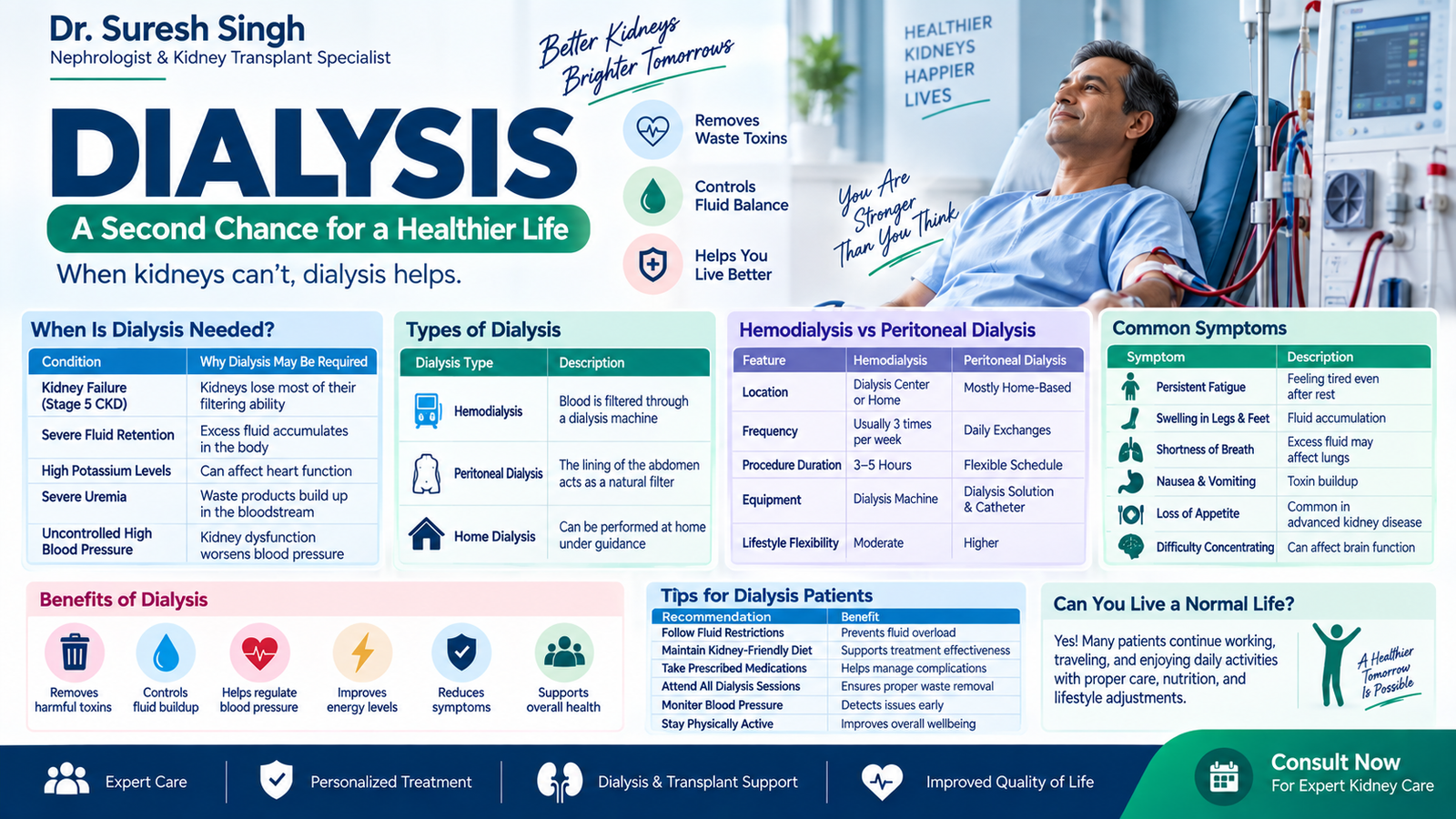
Dialysis is a medical procedure that removes waste products, excess fluids, and toxins from the blood when the kidneys are unable to perform these functions naturally.
It is commonly recommended for patients with advanced Chronic Kidney Disease (CKD) or Kidney Failure.
When Is Dialysis Needed?
Condition | Why Dialysis May Be Required |
|---|---|
Kidney Failure (Stage 5 CKD) | Kidneys lose most of their filtering ability |
Severe Fluid Retention | Excess fluid accumulates in the body |
High Potassium Levels | Can affect heart function |
Severe Uremia | Waste products build up in the bloodstream |
Uncontrolled High Blood Pressure | Kidney dysfunction worsens blood pressure |
Types of Dialysis
Dialysis Type | Description |
|---|---|
Hemodialysis | Blood is filtered through a dialysis machine |
Peritoneal Dialysis | The lining of the abdomen acts as a natural filter |
Home Dialysis | Certain patients can perform dialysis at home under guidance |
Signs That Kidney Function May Be Declining
Symptom | Description |
|---|---|
Persistent Fatigue | Feeling tired even after adequate rest |
Swelling in Legs & Feet | Fluid accumulation due to poor kidney function |
Shortness of Breath | Excess fluid may affect the lungs |
Nausea & Vomiting | Toxin buildup in the bloodstream |
Loss of Appetite | Common in advanced kidney disease |
Difficulty Concentrating | Waste products can affect brain function |
Hemodialysis vs Peritoneal Dialysis
Feature | Hemodialysis | Peritoneal Dialysis |
|---|---|---|
Location | Dialysis Center or Home | Mostly Home-Based |
Frequency | Usually 3 times per week | Daily Exchanges |
Procedure Duration | 3–5 Hours | Flexible Schedule |
Equipment | Dialysis Machine | Dialysis Solution & Catheter |
Lifestyle Flexibility | Moderate | Higher |
Benefits of Dialysis
✅ Removes harmful toxins from the blood
✅ Controls excess fluid buildup
✅ Helps regulate blood pressure
✅ Improves energy levels
✅ Reduces symptoms of kidney failure
✅ Supports overall health while awaiting transplant
Tips for Dialysis Patients
Recommendation | Benefit |
|---|---|
Follow Fluid Restrictions | Prevents fluid overload |
Maintain Kidney-Friendly Diet | Supports treatment effectiveness |
Take Prescribed Medications | Helps manage complications |
Attend All Dialysis Sessions | Ensures proper waste removal |
Monitor Blood Pressure | Detects issues early |
Stay Physically Active | Improves overall wellbeing |
Can Patients Live a Normal Life on Dialysis?
Many patients continue working, traveling, and enjoying daily activities while undergoing dialysis. With proper medical care, nutrition, and lifestyle adjustments, dialysis can significantly improve quality of life.
When Should You Consult a Nephrologist?
If you have chronic kidney disease, abnormal kidney test results, persistent swelling, or symptoms of kidney failure, timely consultation with a nephrologist can help determine the best treatment plan.
Conclusion
Dialysis is a life-saving treatment that helps patients with severe kidney disease maintain their health and quality of life. Early diagnosis, proper treatment, and regular follow-up with a kidney specialist can make a significant difference in long-term outcomes.
Dr. Suresh Singh, Nephrologist & Kidney Transplant Specialist, provides comprehensive kidney care, dialysis management, and advanced treatment options to help patients achieve better kidney health and improved quality of life.