Kidney Transplant: A New Beginning for Patients with Kidney Failure
For patients suffering from end-stage kidney disease, a kidney transplant can offer a new lease on life. Compared to long-term dialysis, kidney transplantation often provides better quality of life, greater independence, and improved overall health outcomes.
What Is a Kidney Transplant?
A kidney transplant is a surgical procedure in which a healthy kidney from a living or deceased donor is placed into a patient whose kidneys are no longer functioning properly.
The transplanted kidney takes over the essential functions of filtering waste, balancing fluids, and maintaining overall body health.
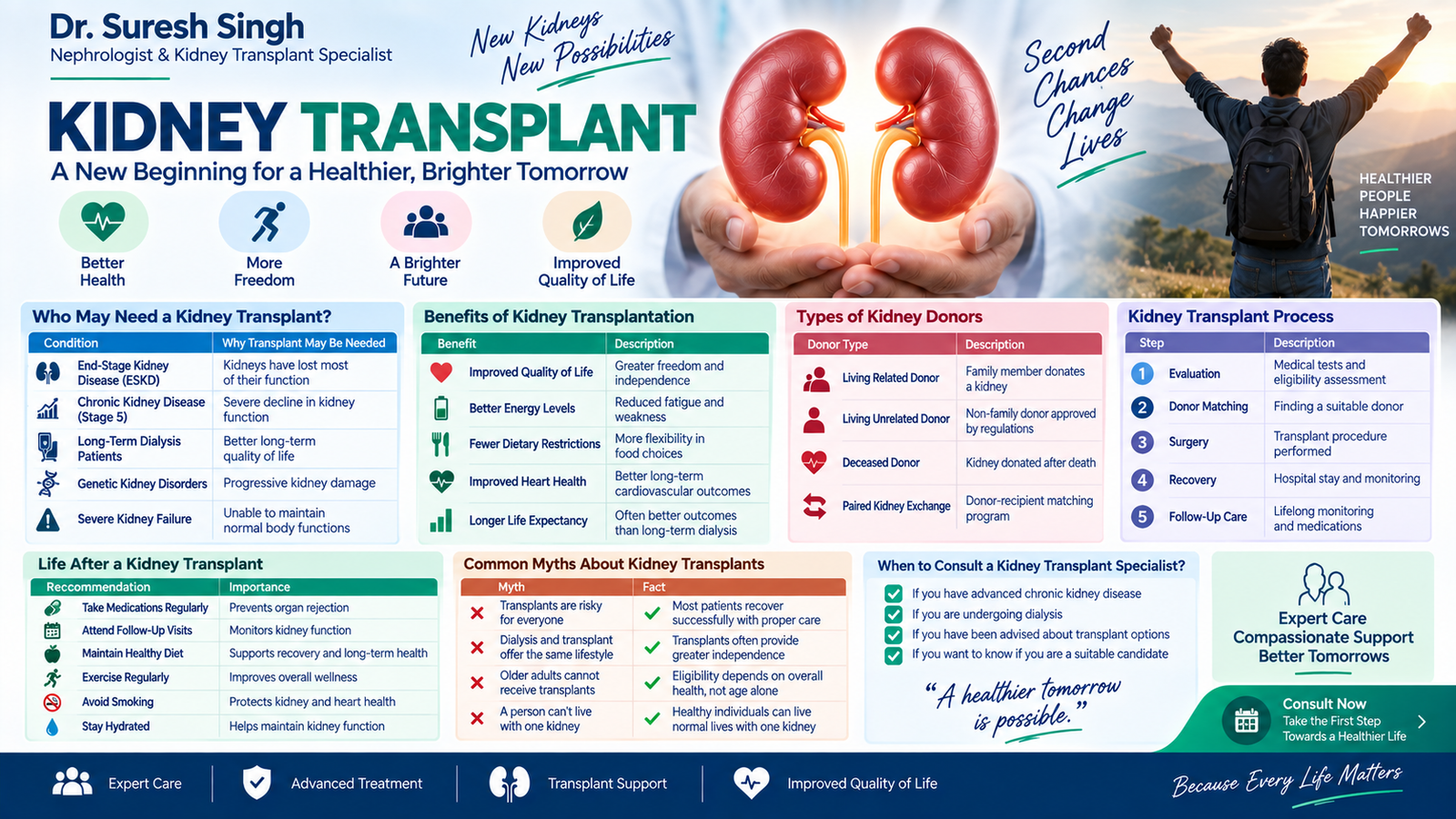
Who May Need a Kidney Transplant?
Condition | Why Transplant May Be Needed |
|---|---|
End-Stage Kidney Disease (ESKD) | Kidneys have lost most of their function |
Chronic Kidney Disease (Stage 5) | Severe decline in kidney function |
Long-Term Dialysis Patients | Better long-term quality of life |
Genetic Kidney Disorders | Progressive kidney damage |
Severe Kidney Failure | Unable to maintain normal body functions |
Benefits of Kidney Transplantation
Benefit | Description |
|---|---|
Improved Quality of Life | Greater freedom and independence |
Better Energy Levels | Reduced fatigue and weakness |
Fewer Dietary Restrictions | More flexibility in food choices |
Improved Heart Health | Better long-term cardiovascular outcomes |
Longer Life Expectancy | Often better outcomes than long-term dialysis |
Types of Kidney Donors
Donor Type | Description |
|---|---|
Living Related Donor | Family member donates a kidney |
Living Unrelated Donor | Non-family donor approved by regulations |
Deceased Donor | Kidney donated after death |
Paired Kidney Exchange | Donor-recipient matching program |
Kidney Transplant Process
Step | Description |
|---|---|
Evaluation | Medical tests and eligibility assessment |
Donor Matching | Finding a suitable donor |
Surgery | Transplant procedure performed |
Recovery | Hospital stay and monitoring |
Follow-Up Care | Lifelong monitoring and medications |
Signs That You May Need a Transplant Evaluation
Frequent dialysis sessions
Persistent fatigue
Poor quality of life
Advanced kidney disease
Difficulty managing fluid balance
Recurrent complications from kidney failure
Life After a Kidney Transplant
Recommendation | Importance |
|---|---|
Take Medications Regularly | Prevents organ rejection |
Attend Follow-Up Visits | Monitors kidney function |
Maintain Healthy Diet | Supports recovery and long-term health |
Exercise Regularly | Improves overall wellness |
Avoid Smoking | Protects kidney and heart health |
Stay Hydrated | Helps maintain kidney function |
Common Myths About Kidney Transplants
Myth | Fact |
|---|---|
Transplants are risky for everyone | Most patients recover successfully with proper care |
Dialysis and transplant offer the same lifestyle | Transplants often provide greater independence |
Older adults cannot receive transplants | Eligibility depends on overall health, not age alone |
A person can’t live with one kidney | Healthy individuals can live normal lives with one kidney |
When Should You Consult a Kidney Transplant Specialist?
If you have advanced chronic kidney disease, are undergoing dialysis, or have been advised about transplant options, consulting a transplant specialist can help determine the most appropriate treatment plan.
Conclusion
A kidney transplant can be a life-changing treatment for patients with severe kidney disease. With proper evaluation, expert surgical care, and lifelong follow-up, many transplant recipients enjoy healthier, more active lives.
Dr. Suresh Singh, Nephrologist & Kidney Transplant Specialist, provides comprehensive kidney transplant evaluation, pre-transplant counseling, post-transplant care, and advanced kidney disease management to help patients achieve the best possible outcomes.