
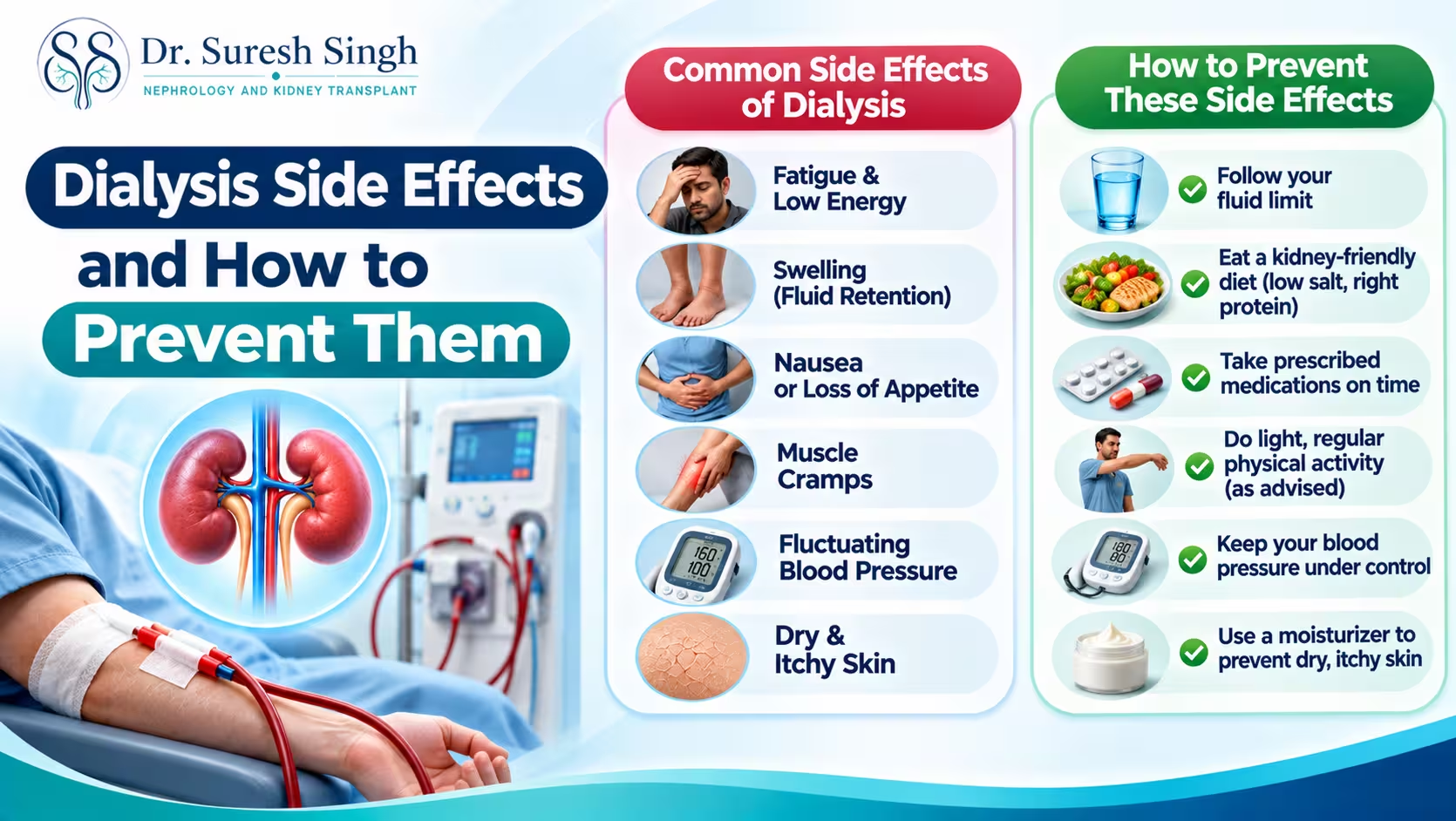
Dialysis side effects vary by treatment type—hemodialysis (HD) and peritoneal dialysis (PD)—and can often be prevented or reduced with fluid control, careful hygiene, diet adjustments, and close coordination with your care team.
What Are the Common Side Effects of Dialysis?
The side effects can depend on the type of dialysis a person receives. Haemodialysis uses a machine to clean the blood, while peritoneal dialysis uses a special fluid placed inside the abdomen.
Here are some problems people may experience.
1. Low Blood Pressure
A drop in blood pressure is one of the common problems during haemodialysis. It can happen when the machine removes fluid from the blood faster than the body can adjust.
A person may suddenly feel dizzy, weak, or sick. Some people also experience sweating, nausea, or blurred vision.
What can help?
-
Follow the fluid limit given by the kidney specialist.
-
Avoid drinking large amounts between dialysis sessions.
-
Tell the dialysis team if dizziness or weakness occurs during treatment.
-
Take blood pressure medicines at the timing advised by the doctor.
-
Do not change medicine doses on your own.
The dialysis team may need to review how much fluid is being removed or adjust the treatment settings.
2. Muscle Cramps
Leg or foot cramps during dialysis can be experienced by some patients. The muscles might suddenly tense up and make it hard for the patient to move the affected part.
This condition may occur if there is an excessive removal of fluid in a short span of time. Variations in the levels of minerals such as calcium, potassium, and magnesium might also contribute to this condition.
What can help?
-
Drink fluids according to the recommended amount.
-
Don't eat salty foods that will cause thirst.
-
Inform the dialysis care team when you have cramps.
-
Adhere to the stretching and movement instructions from the care team.
Never use mineral supplements or sports drinks as remedies for your cramps. Patients with kidney conditions should have some minerals regulated.
3. Feeling Tired After Dialysis
Tiredness after dialysis is normal. People might be able to do okay while on dialysis and just need some rest when they come back from their sessions. Other people might experience tiredness for a few hours after.
Kidney failure alone may cause tiredness. Anaemia, lack of sleep, changes in blood pressure, and dialysis are the factors that can lead to tiredness.
What can be done?
-
Have enough sleep at night.
-
Eat the foods advised by your kidney dietitian.
-
Take any medications for anaemia or other medical conditions.
-
Allow yourself to have some rest.
-
Talk to your doctor if your tiredness is increasing and is causing problems in your everyday life.
If you constantly feel tired, it doesn’t necessarily mean that this is the side effect of your dialysis. Your doctor should examine your blood count, your iron count, and your dialysis process.
4. Infection Around the Dialysis Access
Haemodialysis needs access to the blood. This may be through a fistula, graft or catheter. If germs enter the access area, an infection can develop.
People receiving peritoneal dialysis also have an infection risk. Germs can enter through the abdominal catheter and cause an infection inside the abdomen, called peritonitis.
Look out for these signs:
-
Redness or swelling around the access area.
-
Pain, warmth or tenderness.
-
Pus or unusual fluid coming from the site.
-
Fever or chills.
-
Stomach pain or cloudy fluid drained during peritoneal dialysis.
What can help?
-
Wash your hands before touching the dialysis access or equipment.
-
Keep the access area clean.
-
Follow the cleaning and dressing instructions given by the dialysis team.
-
Follow the correct steps when connecting or disconnecting peritoneal dialysis bags.
-
Do not touch catheter connections with unwashed hands.
Fever, chills, cloudy peritoneal dialysis fluid, or signs of infection around the access need prompt medical attention. Do not wait for the next dialysis appointment.
5. Itchy Skin
Some people on dialysis complain of itching, which can affect their arms, legs, back or other parts of the body. It may become worse at night and disturb sleep.
One reason is the build-up of minerals such as phosphorus when the kidneys cannot remove enough of them. Dry skin and other changes linked to kidney disease may also cause itching.
What can help?
-
Use a mild, fragrance-free moisturiser.
-
Avoid very hot showers.
-
Use gentle soap instead of strongly scented products.
-
Follow the food advice given for phosphorus control.
-
Take prescribed phosphate-binding medicines with meals if advised.
If itching continues, tell your doctor. The cause needs to be checked before choosing treatment.
6. Nausea and Headaches
Some people feel sick or get a headache during or after haemodialysis. This is probably because of a sudden change in their blood pressure or because of the removal of too much fluid from their body. This may also happen because of changes in the body’s balance of minerals.
The dialysis team will need to review your blood pressure and medicines and amend your treatment plan accordingly.
Contact the dialysis team immediately if you get frequent vomiting or severe headaches, as they may need to amend your treatment.
7. Access Blockage, Bleeding or Hernia
There can be some problems regarding blood flow into and out of the body in haemodialysis due to the formation of a blood clot or poor blood flow leading to malfunction of the access.
Hernia is another problem associated with people undergoing peritoneal dialysis. In a hernia, there is bulging due to weakness in the abdominal wall. Another possible complication of peritoneal dialysis is weight gain due to the presence of sugar in the dialysate solution.
What can help?
-
Check the fistula or graft every day as taught by the dialysis team.
-
Report a change in the usual vibration felt over a fistula or graft.
-
Avoid pressure or tight clothing over the access arm.
-
Follow instructions for lifting and physical activity after catheter placement.
-
Report a new lump or swelling in the abdomen.
Bleeding that does not stop, sudden swelling or loss of the usual fistula vibration needs urgent attention.
How to Prevent or Reduce Dialysis Side Effects
You can't prevent every side effect, but daily care makes a difference. Following the treatment plan and telling the dialysis team about new symptoms can help them make changes before a small problem becomes serious.
Follow Your Fluid Limit
People on dialysis may not pass much urine. If you consume more fluids than the kidneys and dialysis treatment can remove, it can lead to fluid overload.
Excess fluid can build up in the body and can result in swollen feet and ankles, difficulty breathing, and increased blood pressure. Excess fluid can also mean that more fluid has to be removed during the next dialysis session, which can result in muscle cramps and a drop in blood pressure.
Make sure you do not consume more fluids than the recommended amount by your doctor. Fluids are also present in food. Tea, coffee, and soup also add to your daily fluid intake.
Reduce Extra Salt in Your Meals
Salty food makes people thirsty and can increase fluid build-up between dialysis sessions.
Try to reduce:
-
Pickles and papad.
-
Packaged chips and namkeen.
-
Instant noodles.
-
Salted biscuits.
-
Processed and ready-made foods.
-
Restaurant meals with extra salt.
Home-cooked food with less added salt is often easier to manage. Your dietitian can also suggest suitable spices and ingredients to improve the taste.
Follow the Kidney Diet
Dialysis patients need to be careful about certain nutrients, but the exact diet depends on their blood reports and treatment.
|
Nutrient |
Why it matters |
Foods that may need portion control |
|
Potassium |
High levels can affect the heartbeat |
Banana, orange, potato and tomato |
|
Phosphorus |
Too much can affect bones and blood vessels |
Milk, cheese, nuts and cola drinks |
|
Sodium |
Extra salt can increase thirst and swelling |
Pickles, papad, namkeen and packaged snacks |
|
Protein |
Helps maintain muscles and strength |
Eggs, fish, chicken, dal and other protein foods |
Do not remove these foods completely without advice. People on dialysis often need enough protein, and their food needs can differ from those of people who are not receiving dialysis.
Take Medicines at the Right Time
Patients on dialysis might require drugs for high blood pressure, anemia, bone diseases, and many more.
A few individuals will also require a phosphate binder. This drug helps in lowering the level of phosphorus from the food and is normally taken along with meals according to medical prescription.
Inform your healthcare professional regarding the medications that you are currently taking, including any vitamins or supplements. You must not stop, discontinue, or alter the dose of medications without medical advice.
Attend Every Scheduled Dialysis Session
Missing a dialysis session allows extra fluid and waste to build up in the body. This will make the next session difficult and may lead to difficulty breathing, high potassium levels, and other complications.
Make sure that you keep all your sessions and that the entire session is completed. In case you have to miss your session for any reason, contact the dialysis center.
Keep the Dialysis Access Clean
The access site requires daily care. Clean the access site according to the instructions provided and check for signs of redness, swelling, pain, warmth, or bleeding.
Patients with fistulas or grafts are required to know how to feel the vibration that is present at the site. When there is no vibration or the sensation changes, contact the dialysis team at once.
Those undergoing peritoneal dialysis are supposed to practice good hand hygiene, cleaning, and connection practices as demonstrated during their training. Any lapse in the procedures could introduce bacteria into the abdominal cavity.
When Should You Contact Your Doctor?
Some symptoms can wait for a routine check-up, but others need quick attention. Do not try to manage serious symptoms at home.
Contact your dialysis centre or seek urgent medical help if you notice:
-
Chest pain or difficulty breathing.
-
Fainting or severe weakness.
-
Fever or chills.
-
Redness, swelling or pus around the dialysis access.
-
Bleeding that does not stop.
-
Severe or repeated muscle cramps.
-
Stomach pain or cloudy drained fluid during peritoneal dialysis.
-
A sudden change in the usual vibration of a fistula or graft.
Always report new symptoms during dialysis rather than waiting until the session is over.
Expert Dialysis Care With Dr. Suresh Singh
Patients receiving dialysis need regular medical supervision to monitor kidney function, treatment adequacy, fluid balance and possible complications. Dr. Suresh Singh, Nephrologist & Kidney Transplant Specialist in Lucknow, holds MBBS, MD (Internal Medicine) and DM (Nephrology) qualifications. His clinical experience includes 200+ kidney biopsies, 200+ dialysis catheter insertions and 50+ kidney transplants, as listed on his official website. He provides comprehensive kidney care, including dialysis-related evaluation, treatment planning and long-term monitoring. Patients experiencing dialysis-related complications should seek a medical assessment to identify the cause and receive appropriate guidance.
Related Treatments
Related Articles
Conclusion
While dialysis can sometimes be uncomfortable, side effects must not be overlooked or thought of as a routine consequence of dialysis. Low blood pressure, muscle cramps, fatigue, itching, and infections are among the side effects that can be avoided with proper care. Following instructions about fluids and foods, keeping the access site clean, and coming to every appointment will decrease side effects.
Dr. Suresh Singh is a Consultant Nephrologist and Kidney Transplant Physician with more than 5 years of experience in nephrology in Lucknow. People undergoing dialysis can consult a kidney doctor about their side effects, treatment, and other concerns.
Frequently Asked Questions
1. Is it common for dialysis patients to feel weak after every dialysis session?
Some fatigue after dialysis is normal, while serious weakness requires further investigation since low blood pressure, anemia, sleep deprivation, or other factors might be to blame.
2. Is it possible to sleep while receiving dialysis?
It is possible to rest and even sleep during the procedure. But the patient must tell the dialysis center’s staff about feeling dizzy, feeling sick, or feeling uncomfortable.
3. Does dialysis lead to weight gain?
Yes, dialysis can lead to weight gain. People who receive peritoneal dialysis can gain weight due to the sugar content in dialysis fluid that gets absorbed into their body. Weight gain is also possible among hemodialysis patients due to fluid retention.
4. Why do patients experience itching despite dialysis?
This symptom may be due to dryness of the skin, increased phosphorus levels, or other conditions that develop as a result of kidney diseases. A physician must evaluate blood test results, prescribed medications, and treatment to determine the exact reason.
5. Can dialysis side effects be completely avoided?
Unfortunately, in some cases, this is not possible. Patients may still suffer from certain symptoms even when following their therapy. However, reporting such complications will help doctors identify the cause and adjust treatment.