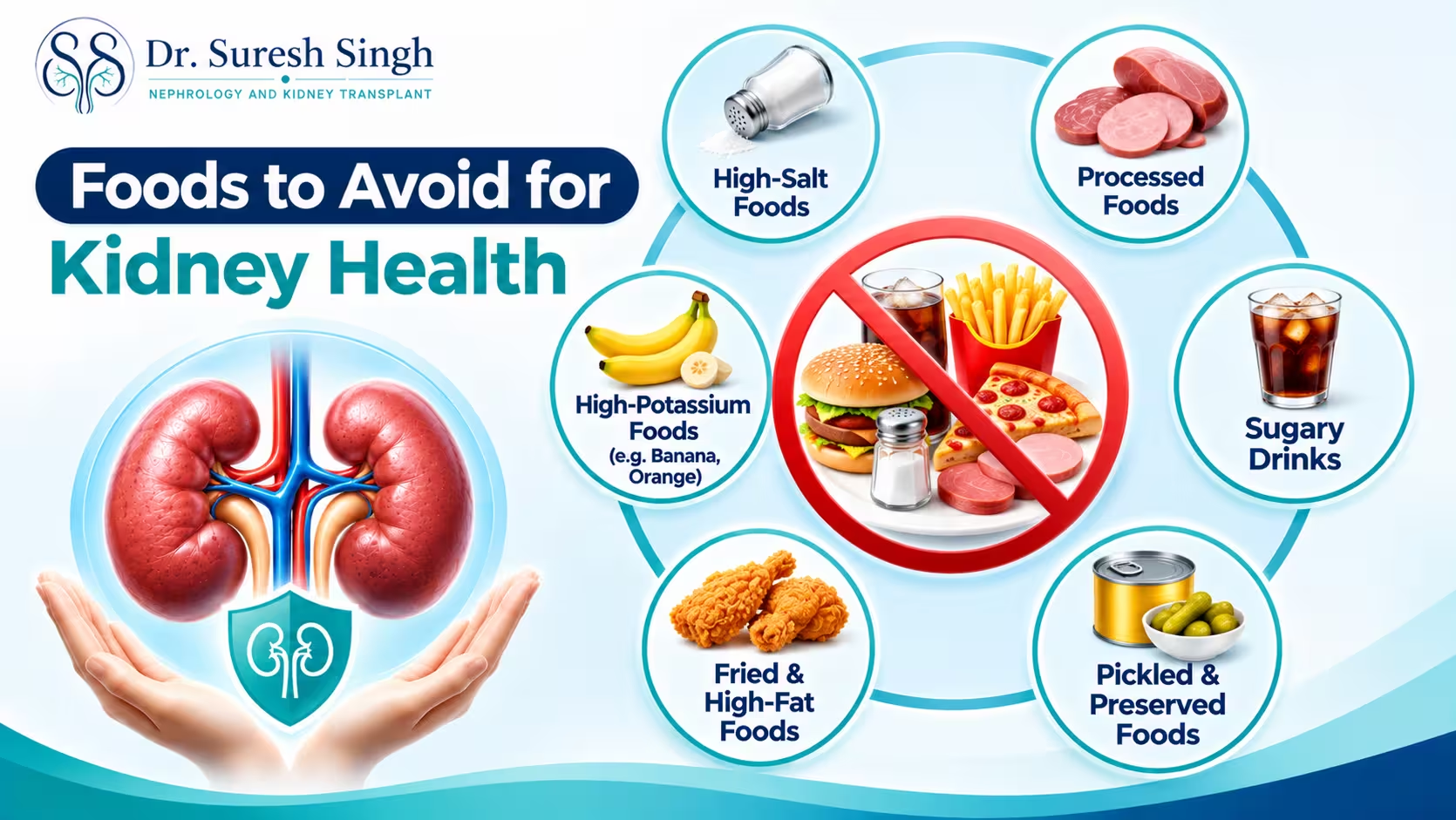
Foods to limit or avoid for kidney health depend on your kidney function and lab results, commonly targeting high sodium, potassium, phosphorus, added sugars, and excess protein.
Why Does Food Matter in Kidney Disease?
Healthy kidneys get rid of excessive waste products and fluids from the blood. Moreover, the kidneys regulate the balance of minerals like potassium and phosphorus.
When kidney function decreases, maintaining this balance becomes hard. Increased salt levels can cause edema and high blood pressure; increased potassium can negatively influence the heart rate, whereas excessive phosphorus causes bone damage and damages the blood vessels.
Therefore, a kidney diet is more than just cutting down food consumption. It is about selecting the appropriate foods in proper portions.
1. Foods High in Salt and Sodium
Salt is one of the first things doctors ask people with kidney disease to watch.
Too much salt makes the body hold on to water. This can increase blood pressure and cause swelling in the feet, ankles, hands or face. It may also make it harder to manage fluid levels in people with advanced kidney disease.
Some common foods that can contain a lot of salt include:
-
Pickles and salted chutneys
-
Papad and namkeen
-
Packaged chips and savoury snacks
-
Instant noodles and ready-to-eat meals
-
Salted biscuits and crackers
-
Processed cheese
-
Sauces, ketchup and packaged seasonings
-
Restaurant and fast food
A common mistake is to avoid adding extra salt to meals but continue eating packaged snacks every day. Much of the sodium in a person's diet can come from these foods.
Try preparing more meals at home. Use lemon, coriander, cumin, garlic, ginger and other herbs or spices to add flavour without relying heavily on salt.
2. Foods High in Potassium
Potassium plays an essential role in ensuring that the heart, muscles, and nerves function normally. Well-functioning kidneys are responsible for getting rid of excess potassium via urine production. If the kidneys fail to function well, potassium can accumulate in the bloodstream.
High levels of potassium can cause irregularity in heartbeat rhythm. The reason is that one may not feel any symptoms until the potassium level reaches very high levels.
If blood tests show high potassium, a doctor may ask the person to reduce certain foods, such as:
-
Bananas
-
Oranges and orange juice
-
Coconut water
-
Potatoes and sweet potatoes
-
Tomatoes and tomato puree
-
Spinach
-
Dried fruits such as raisins and dates
-
Avocado
Does this imply that all individuals with kidney disease must avoid such foods? No.
An individual with kidney disease at an early stage and normal potassium levels can avoid the need to exclude such foods from his/her diet. Advanced stages of kidney disease and elevated potassium require extra caution in food intake.
Apples, grapes, berries, cabbage, cauliflower, and cucumber might be good options for individuals who have to restrict their intake of potassium.
3. Foods and Drinks With Added Phosphorus
Phosphorus plays an important role in maintaining healthy bones and teeth. It occurs naturally in milk, meat, nuts, beans, and whole grain foods.
This condition becomes a challenge once the kidneys fail to eliminate excess phosphorus from the body. It may cause problems for the bones and the blood vessels. At times, patients experience symptoms like itching, bone pain, and joint pain.
The phosphorus content in processed food is usually high because food producers use phosphate in their products to enhance flavor, texture, or shelf life.
Foods worth checking include:
-
Processed cheese and cheese spreads
-
Packaged bakery products
-
Processed meats and sausages
-
Dark-coloured cola drinks
-
Instant and ready-to-eat foods
-
Packaged foods containing phosphate additives
Look at the ingredient list when buying packaged products. Words such as phosphate, phosphoric acid and sodium phosphate can indicate added phosphorus.
Not all foods that naturally contain phosphorus need to be removed. The body generally absorbs less phosphorus from many plant foods than from animal foods and phosphate additives. A kidney dietitian can help decide which sources need attention.
4. Too Much Red Meat and High-Protein Food
Everyone needs protein to stay healthy. However, the body creates waste when it uses protein. The kidneys help get rid of this waste.
For people who have chronic kidney disease and are not on dialysis, the kidneys still need to get rid of a lot of waste, and too much protein can make that worse. Large portions of red meat, poultry and fish, and protein supplements may need to be limited.
People should talk to their kidney doctor before limiting any of the following:
-
Eating large amounts of mutton and red meat
-
Eating processed meat
-
Eating many small meals that are high in protein
-
Using protein supplements and powders
-
Drinking high-protein shakes
All of the above do not mean a person should not use protein in their diet. Not getting enough protein can cause a person to lose muscle and increase the risk of poor nutrition.
People on dialysis actually may need more protein in their diet because protein is lost during the process. Their diet should not be limited to that of a person with chronic kidney disease that is not on dialysis.
5. Packaged and Ultra-Processed Foods
Packaged food has a lot of convenience, but foods can contain many ingredients that are limited in a kidney disease diet. Some foods are high in salt or add phosphorus and potassium. There can also be saturated or unhealthy fats.
Some examples of foods are:
-
Instant soups and noodle cups
-
Frozen ready meals
-
Packaged meats
-
Processed cheeses
-
Flavored chips and snacks
-
Packaged sauces and seasonings
-
Sweetened drinks
Foods may not be salty. Some foods may not have a salty taste. This is why it is important to always check the nutrition label. Pay attention to sodium per serving.
Check the ingredient list for added phosphates or potassium chloride. "Low sodium" foods may have potassium or other salt substitutes. This may not be good for someone with kidney disease.
6. Foods With Too Much Sugar
Eating too much sugar doesn't destroy the kidneys. But overconsuming sugary foods and drinks can lead to weight gain and poorly controlled blood sugar.
This is relevant because diabetes is a leading cause of chronic kidney disease.
Things to limit are:
-
Sugary drinks
-
Juice drinks
-
Sweets and desserts
-
Breakfast cereals
-
Cakes and pastries
People who have diabetes and chronic kidney disease (CKD) need to manage their blood sugar and their kidney diet. Oftentimes the needs of the kidney diet and the blood sugar diet align, and therefore the food choices for CKD and diabetes are often the same.
7. Certain Salt Substitutes
However, some individuals use low-sodium salts in place of ordinary table salt. However, such alternatives may appear to be better, but at times, the salt products contain potassium chloride rather than sodium chloride.
It will hurt an individual who lacks the capacity to eliminate the extra potassium from his body
Before consuming such salt products, one needs to find out what they contain and consult a doctor about their use. The alternative of using herbs and spices is often simpler.
Foods to Limit: A Quick Look
|
Food or drink |
Why it may need to be limited |
|
Pickles, papad and namkeen |
Often high in sodium |
|
Bananas, oranges and coconut water |
Can provide a lot of potassium |
|
Potatoes and tomatoes |
May need portion control if potassium is high |
|
Processed cheese and cola drinks |
May contain added phosphorus |
|
Large portions of red meat |
Can provide more protein than some people with CKD need |
|
Instant noodles and packaged meals |
May contain high amounts of salt and additives |
|
Sugary drinks and sweets |
Can make blood sugar and weight harder to manage |
|
Potassium-based salt substitutes |
Can increase potassium intake |
This is a guide to foods that may need attention, not a list of foods that every kidney patient must completely avoid.
Does Every Person With Kidney Disease Need the Same Diet?
Not necessarily. Two patients with kidney disease can be prescribed a completely different diet.
For instance, a patient with an early stage of kidney disease with normal potassium and phosphorus levels can be prescribed a diet that does not restrict bananas, tomatoes, and dairy products. A patient with late-stage kidney disease with elevated potassium levels would have to restrict certain foods.
The diet is also affected by dialysis, which means that a patient who is receiving dialysis treatment should eat more protein but monitor other nutrients carefully.
Doctors usually consider:
-
The stage of kidney disease
-
Blood potassium and phosphorus levels
-
Blood pressure and blood sugar
-
Urine output and swelling
-
Whether the person is receiving dialysis
-
Weight, appetite and nutritional condition
A kidney dietitian can use these details to prepare a meal plan that suits the person instead of asking them to follow a long list of restrictions.
What Can You Eat to Support Kidney Health?
A kidney-friendly diet can still include familiar home-cooked food. The aim is to choose suitable portions and prepare meals with less added salt.
Depending on blood test results, a person may be able to include:
-
Apples, grapes and berries
-
Cabbage, cauliflower and cucumber
-
Rice and other suitable grains
-
Freshly prepared meals
-
Plant-based protein in appropriate portions
-
Fresh herbs and spices for flavour
People with kidney disease do not need to follow a fruit-free or vegetable-free diet. The choice depends on potassium levels and the person's nutritional needs.
Expert Kidney Care With Dr. Suresh Singh
Dr. Suresh Singh, a Nephrologist in Lucknow, provides specialist care for patients with kidney-related conditions, including Chronic Kidney Disease (CKD), kidney failure, glomerular diseases, and other kidney disorders. Patients with abnormal kidney function tests or concerns about their diet can seek guidance on managing their kidney condition, understanding their test results, and identifying appropriate treatment and dietary requirements based on their individual health needs.
Related Treatments
Related Articles
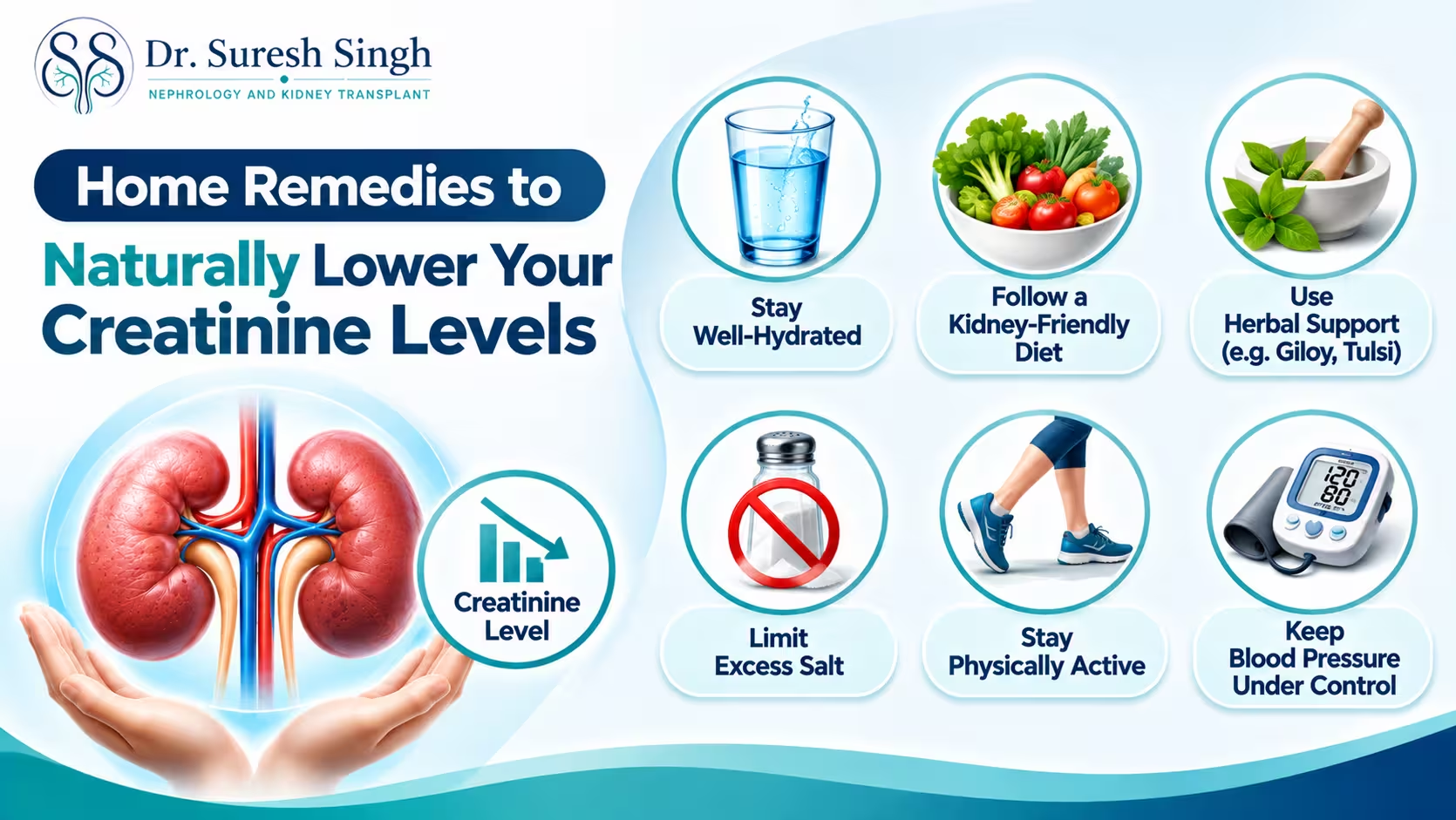
- Home Remedies to Naturally Lower Your Creatinine Levels
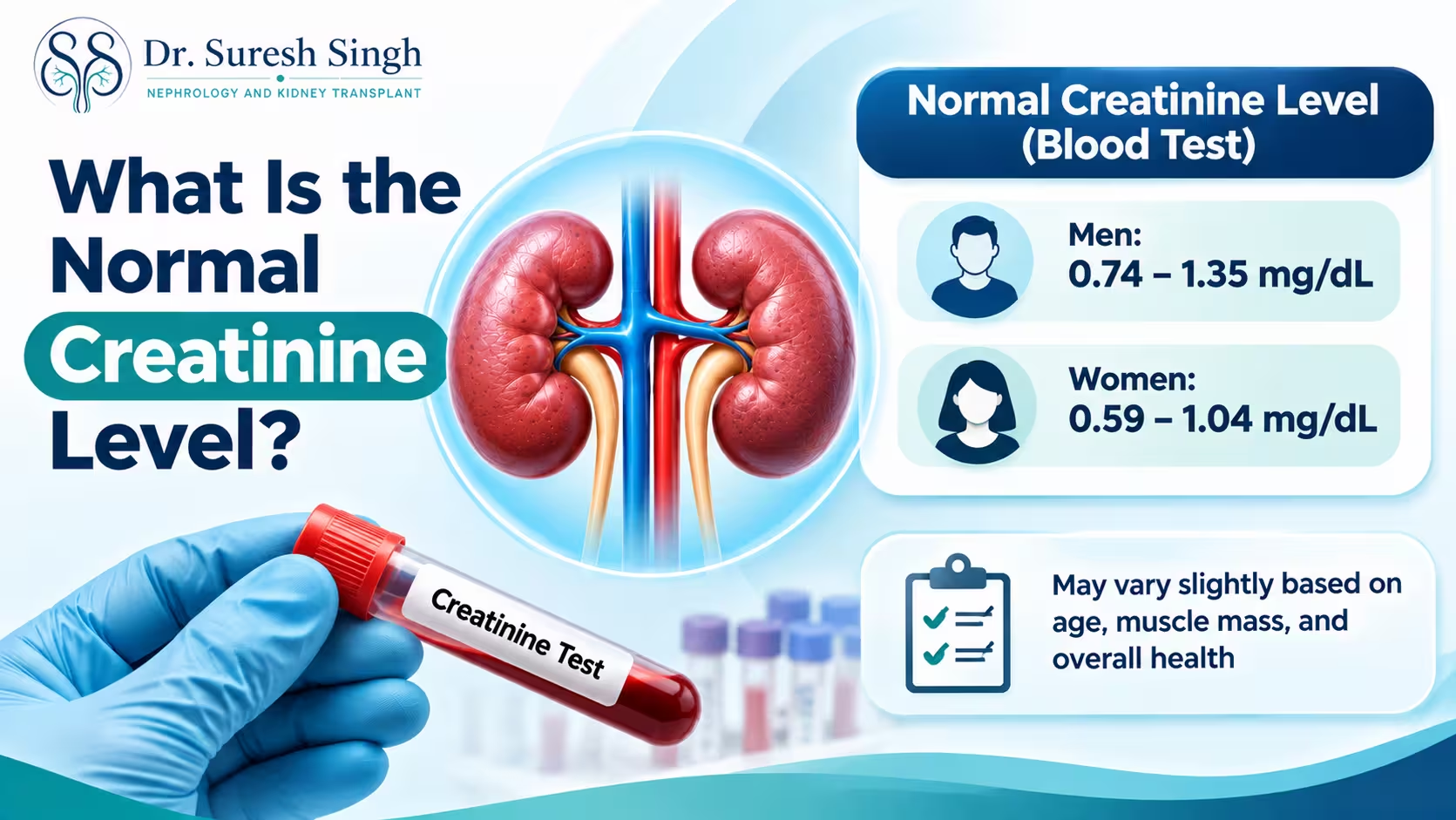
- What Is the Normal Creatinine Level?
- Kidney Failure: Symptoms, Causes, Stages and Treatment
Conclusion
The management of kidney disease does not necessarily imply the elimination of all foods containing sodium, potassium, phosphorus, or proteins. What is required is knowledge of which nutrients should be restricted and the amounts required by an individual. Excessive food restrictions may also cause malnutrition problems.
Consultant Dr. Suresh Singh, Nephrologist & Kidney Transplant Specialist, who works in Lucknow, has over 5 years of experience in kidney management. Patients with kidney diseases can consult him for report interpretation and dietary guidance in accordance with their kidney condition and requirements.
Frequently Asked Questions
1. Is the consumption of milk harmful for patients suffering from kidney ailments?
Not necessarily. Milk is high in protein content and also contains potassium and phosphorus; hence, patients with advanced-stage kidney problems will have to keep a check on intake of milk as per their kidney function and test reports.
2. Can a person suffering from kidney problems consume dal?
Yes, consumption of dal can be considered by patients suffering from kidney problems, as it is rich in plant proteins and other nutritional elements. The quantity may vary based on potassium and phosphorus content.
3. Can people with kidney disease consume eggs?
Yes, patients with kidney problems can include eggs in their diet. Egg whites are rich in protein and low in phosphorus when compared to egg yolk.
4. Is coconut water suitable for people suffering from kidney problems?
Coconut water has potassium. People who have excess amounts of potassium or who suffer from severe kidney problems may require restriction or limitation of its consumption. It would be better to consult a doctor in such cases.
5. Is it necessary for patients undergoing dialysis to refrain from taking protein?
No. Patients undergoing dialysis need more protein because some protein gets filtered out by this process.